
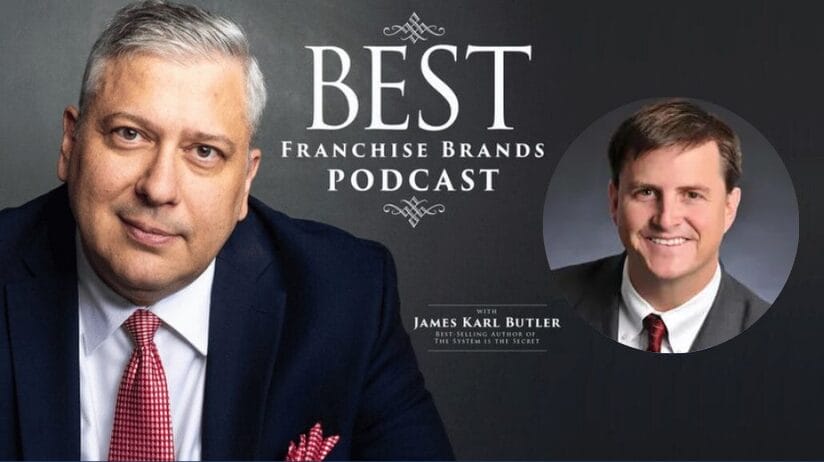
In this episode of Best of the Best in Franchising, James Butler talks with Pat Abernathey, a multi-unit Caring Senior Service franchise owner in Colorado, about his journey from corporate support to franchise ownership. Pat shares how his background helping franchise owners grow their businesses prepared him to successfully launch and expand multiple locations.
Pat discusses what it takes to scale a home care franchise, including building strong referral relationships, structuring teams to avoid burnout, and relying on proven systems to deliver high-quality care. He also reflects on the growing demand for non-medical home care as more seniors choose to age in place and explains how Caring Senior Service’s ongoing support and collaborative culture have helped drive long-term success.
Read the full transcript below!
Transcript
00:00 James Butler
Welcome to this episode of the Best of the Best in Franchising podcast.
Today we’re privileged to talk with Pat Abernathey of Caring Senior Service, who’s a multi-unit operator in Colorado.
He actually owns a location in Lafayette, Colorado, which is part of Boulder County. He’s got one in Fort Collins and he also has one in Lakewood, Colorado, which is just west of Denver.
It’s an absolute honor to have him on the podcast here today. He started his franchise back in January of 2013, and he did work for corporate from 2005 until 2012.
So Pat, thank you so much for being here today. We really appreciate it.
00:29 Pat Abernathey
Thank you for having me.
00:31 James Butler
You bet. Well, tell us about your background. How did you get into working at Caring Senior Service? Maybe we can talk about how you got into franchising as well.
00:38 Pat Abernathey
You know, honestly, it was a bit of an accident, James. I knew the CEO of Caring Senior Service, Jeff Salter, prior to working for him. He and I played, we played rugby and knew each other from our rugby club in there in San Antonio, where the Caring Senior Services is based. And he and I had knew each other for about 6 years prior.
And I had been in sports marketing for a local university. And, you know, was enjoying that. But honestly, the financial growth potential wasn’t there. Also, sports at a university become very repetitive. Year after year, it’s the same thing. And I enjoy sports, but working, like anything, you may enjoy your job, but sometimes it becomes just a job.
And so Jeff and I have been talking about a student, actually, who worked for me at the university about getting some marketing help for Caring Senior Service. Caring Senior Service at the time was a little bit, a lot smaller. And Jeff was sort of new to the franchising game.
After we talked, Jeff asked me to come work for him to help him grow the franchise business. But specifically, I was tasked with helping franchise owners go out and market their business, sell, make sales calls, things like that.
And I learned a lot along the way because I had never been in the healthcare industry or even peripheral to the healthcare industry. So I was really learning, drinking from a fire hose, learning as I went.
Jeff was an expert, obviously having done it already 15 years by that time. But so he taught me everything he could. And we traveled around together. We traveled separately. We were opening new offices, new locations, and selling franchises. I was not involved in the actual franchise sales part of it. I was more of a support role, specifically helping them make, you know, growing their territories, growing their sales internally.
And that’s kind of how I got into it. It was really a bit of an accident. A happy accident.
03:23 James Butler
Well, what made you decide actually to become a franchisee yourself and join the franchise?
03:29 Pat Abernathey
We at Caring Senior Service, especially during and currently, but we always prided ourselves on franchise support. And we were very, the team at corporate was very dedicated to the individual franchisees.
And we knew we had a small group. It was intimate. And we knew those franchise owners very well. And we, I saw their success, especially the ones who listened to us, took our advice, followed the model, and implemented their, you know, the strategies and tactics we were giving them. They had tremendous success.
And then some personal things in terms of, just wanting to kind of explore and be my own boss. I mean, not that working with Jeff was a problem or anything, but there was a lot of attraction to being a franchise owner.
And so I went ahead and took the leap. And quite frankly, Texas, we were living in Texas and I grew up in Texas. It was super hot. And Colorado offered less heat. We needed a big metro area to have a successful franchise. Denver was open, the Denver area. And that’s basically what happened. It was opportunity — just seeing other people’s success and wanting to see to replicate that.
05:21 James Butler
So did you start the Lafayette office there in Boulder County 1st and then add the Dallas and the Fort Collins locations on?
What water did you do that in? As far as your multiple expansion.
05:31 Pat Abernathey
There was a franchise owner in Fort Collins.S o she was actually the first owner in Colorado. And I was actually up here helping her open her office.
And I see here, I was in, Colorado and that’s what kind of made me think this is pretty attractive. She did not want to expand. And Boulder County was a good, area, good, demographics, and an attractive place to live.
So my family and I made the decision that would be a good one. And plus, that original franchise owner in Fort Collins, she and I made a very good team. And we worked together helping each other. And then, so I opened the Boulder County office, worked with her as she grew Fort Collins. Then she and I opened the Lakewood office together originally.
Fast forward several years, and she wanted out of the franchise game and just was moving on to different opportunities. So she, I purchased all of Lakewood from her and purchased Fort Collins. So, just consolidated everything.
She and I still work together. She does some back office stuff for me because she’s expanded her own personal business in accounting, bookkeeping, things like that. And she’s very helpful because she knows the business knows the ups and downs, but also knows the financing. And she just didn’t want ownership anymore. And we still make a good team.
07:22 James Butler
Yeah, that’s great. Well, talk about the size of your business today. How many employees do you have working for you or people that you have contracted out to help you to grow the business and actually go meet with the patients or go meet with the clients? And then just the overall revenue that you’re doing in your business as well between your three locations?
07:38 Pat Abernathey
So right now we’re on a run rate between all three, with all three offices, we’re in the 4.5 million rate as of today. Hopefully, with a little bit of growth in the last quarter, we can reach up closer to five.
And this industry is sometimes a little up and down. Each office is, one office might be up, one office might be down, depending on client load. Between the three offices, we have about 130 caregivers who work for us. Again, that number fluctuates from office to office depending on client load. But regularly, we’re writing 120, 130 checks every two weeks.
And then I have full-time people in the offices, care managers and agency directors. So I have, right now I’m hiring a care manager in Fort Collins. So I have an agency director and I have a salesperson. So that’s two full-time people there.
I have a full-time manager, a care manager in training, a salesperson in the Boulder, Lafayette location. And then also, she’s based in that office, but she does hiring, recruiting for all three. So that’s a full-time position.
And then in Lakewood, I have two, I have an agency director, a care manager, and a salesperson. So all of those positions are full-time office folks.
And the interesting part of that, recruiting person is… Because of the growth and the synergy of having three locations, in the past, with one location, you would have a, or we would have, the office people would be jacks of all trade. They would hire, manage, schedule, things of that nature. And our software is very good and allows fewer people to do a lot of work. It’s very efficient.
But with the growth of all three and just the need for daily attention to recruiting, which is a big, that’s our whole business, right? We were, I was able to find this person. She was, she had been a care manager and just focus her completely on recruiting, onboarding, She still, she does not do the interviews because the local offices still need to get eyes on people and because they’re going to manage that person.
But the paperwork, the hiring processes, all of that is taking the background checks, et cetera, is taken care of in one central location and it’s made our, it’s freed up our office staff to do more client interaction, more better care plans, things of that nature. So it’s been a great, great thing.
And I think it’s all comes down to growth has allowed us to put that in place. That’s a long answer for to talk about one position, but yeah.
11:12 James Butler
No, that’s great. Well, for the 130 caregivers you have on your team right now, how many clients can they reach out to? That’s kind of a question I’m sure people have to think about your business in particular there as Caring Senior Services.
How many clients can someone manage themselves? And you as the owner, obviously, you’re not actually going out there doing any of the care yourself.
So talk about that a little bit about what you’re doing pretty much on a day-to-day basis, and then also kind of how you, what your team does, how many people, maybe patients they can see in a day or clients they can see in a day, those kinds of things.
11:41 Pat Abernathey
Yeah. So we’re a one-on, non-medical home care. We are, it’s all private pay in our model. We do some veteran VA stuff as well, but it’s very similar in terms of operation. It’s just a different payer source.
But we are generally, we’re a one-on-one agency. So for every client we have, we have one caregiver, usually two. So the ratio is about two caregivers to every one client. Because you have some caregivers who work a lot, some caregivers who work part-time, you know, so it’s a mix. And you also have clients, some clients are very. They use a lot of hours in a week. Some clients use very few hours in a week. So it’s very, it’s a mix.
But generally the ratio is about two caregivers to every client. And it’s one-on-one. We go, we don’t do any live-in work.
So it’s our biggest shifts are 12-hour shifts. Someone who need, a client who might need us all day. Then we do have clients who need us around the clock. So we’ll have two 12-hour shifts in a day. And that’s obviously two different caregivers.
Occasionally we’ll split that into three 8-hour shifts, but the caregivers tend to want the 12-hour shifts. So we try to, and that helps us with continuity. Clients don’t want a lot of turnover in their staff. So we try to keep that as as low as possible without, breaking, having too much overtime or things like that.
And because we don’t want to, we don’t want to pass on too many costs to the clients. So we balance it very well. Scheduling is everything in our business. It’s the schedule is sacrosanct. And so we work on it constantly trying to balance those. The client wants and the client needs to employee wants and needs and management wants and needs, right?
So it’s just a constant juggling act in that regard.
13:58 James Butler
Yeah. What do you find yourself doing most of the time as far as your schedule? What do you talk about your schedule a little bit, what you do?
14:04 Pat Abernathey
Yeah. So I spend most, I travel to each office once a week. It’s the Lafayette office is easy because I only live 3 miles away from it. So I tend to—I actually have to fight the urge to spend more time in that office on a daily basis because the other offices feel like I play favorite.
So I have to really, I have a home office that I try to work out of predominantly. I spend multiple hours a day on the phone talking.
Right now, I would say I’m A cheerleader. I’m A referee and I’m A motivator. So that’s my main, those are my main jobs. My specialty, even when I was in the business more, is sales. So I spend a lot of time either riding around with my salespeople or coaching them via the phone, you know, working, trying to get them to improve their discipline, improve their sales focus.
And then I’m on the phone with my agency directors quite a bit, answering questions, helping them walk through issues, or just listening. I do a lot of listening, getting reports. I try to lead by, you know, asking them how they should handle things. So I listen, and then I ask questions and try to help them walk through answers so that when that issue comes up again, and it will.
We don’t have a lot of unique situations. So they can repeat that process, repeat that answer. And then also we talk about how they can avoid an issue if it’s something that’s avoidable. We talk about that a lot. So I’d probably spend 4 hours a day just on the phone helping with various things or cheerleading or refereeing or things of that nature.
But I do try to work out of an office once a week. So I sit in the office, listening to the activity and helping. I still help. I’ll do, I’ll get in the, you know, the software system and enter clients or enter caregivers or do things paperwork, just to, because those are tasks that take, they actually take a lot of time for the office staff. So if I can do some work for them, free them up to do something else, it’s good.
Yeah. And it helps me keep my skills sharp as well.
17:01 James Butler
Yeah. We’ll talk about the sales process a little bit. Where do most of your clients come from and how does Caring Senior Service help you to do that or how they helped you in the process of building your franchise to have help in that department?
17:12 Pat Abernathey
So we are a referral business. We get all of our 90% of our business from direct referrals from healthcare professionals, hospice companies, assisted living communities, rehabs, short-term rehabs, home health companies, and other healthcare professionals who generally.
And then we position ourselves looking, we want to help. The emergency might not be the right term, but urgent care type situations.
So for example, a one-on-one in a memory care facility where the patient, the client has tried to elope, and they need someone to be with them while they, so that the staff doesn’t have, they can’t afford, or they can’t, they don’t have the staff to look after that person one-on-one, so they have to hire us. And those are emergency-type situations.
Or for example, a hospice patient who is bed bound and the family’s not prepared to take care of that person in that regard, but it’s an urgent situation.
They were ambulatory yesterday, and now they’re bedbound. So we get those calls all the time.
And we’ve positioned ourselves to be that company that’s very, very fast acting, responsive, and with a well-trained caregiver who can handle that situation, either the memory care situation or the hospice situation. And so we get a lot of referrals that way.
So our salespeople, go make calls on those individuals and tell that, try to tell those stories and ask for a chance to prove ourselves. And that’s, and then we start to gain momentum. Once you prove yourself and come through in an emergency, people tend to give you more chances. And that’s where we shine.
19:38 James Butler
That’s awesome. How has Jeff and his team there at Caring Senior Service helped you?
Obviously, you kind of learned probably about the whole sales process from doing it yourself at corporate, but how would they help support you and your franchise operation as you continue to scale and grow your operation?
19:51 Pat Abernathey
Yeah. They do a very good job of the overall branding and marketing for a very reasonable price. We could, as a company, do some expensive advertising and things like that. They are very targeted, so they’re very mindful of our, as franchise owners, our bottom line. And they, so they do just a great job of keeping our brand and our logo in front of folks who we’re already seeing. So we build the list, and they’re targeting those people on the back end with, weekly newsletters. There’s targeted internet drip campaigns and some of our pay-per-click stuff is all focused on areas where we’re already strong. So that, so the, and social media, so that
My salespeople can really focus on one-on-one relationships while there’s, the old adage of you need a lot of touches, quote unquote touches. Jeff’s team takes care of a lot of the touches that are not the face-to-face interactions. So we’re not, you know, we’re not producing local newsletters here because we don’t have to. Right. Corporate’s doing that for us. And it’s a tremendous help, keeps us focused, keeps us out on the field where we want to be, frees us up, frees our time up. The more people we can talk to, the better. And if they’re taking care of some of that back end stuff. And they’re good stewards of our dollars, which is important. You know, they’re not overspending. Jeff, after 30 plus years, knows what works, he knows what doesn’t work.
And his staff is the same way. So we’re not wasting money on campaigns that we know are not going to help us. We’re really trying to build a base level brand business or brand awareness and keep, but also keep the cost reasonable. And to Jeff’s credit, that’s not just about marketing.
He’s always been cognizant of the franchisee’s dollar. And he wants our margins to be as robust as possible. And he’s been very, very cognizant of that throughout, even when I first met him, you know, in 2000 or first started working for him in 2005, very cognizant of cost.
22:46 James Butler
Sure, absolutely. One of the things that’s exciting about your business in particular, your industry, is the fact that how many people want to age in place. the seniors population, 90% want to age in place. They don’t want to go to a facility or to a home. They’d rather stay at their home and do that. And your service really provides that excellent opportunity for them to do that. What are you most excited about as your business continues to grow and expand? Because you have a lot more seniors turning 65 or 75 plus now in your area every single day. So talk about that a little bit about the opportunity as you see it for the future.
23:16 Pat Abernathey
I’m excited about awareness. And I say that when 20 years ago, when I first started in this industry, the awareness, even then, even though Jeff had been around for 15 years and some other companies had been around, the awareness of non-medical home care in the public and in the, even in the healthcare industry was not very strong.
Back in 2005, we had to do a lot of education. What is home care? What is, what is the benefit of having a company rather than an individual you hire off the street, things of that nature. And since then, the awareness, we don’t have to explain to people what it is anymore. And that awareness is growing every, with every year, people, more people have used home care for a loved one. We’re starting to see, folks who are using our services who used it for their parents. That’s so, and that’s going to, that’s going to continue. So I see, as you said, there’s this tremendous need, you know, that’s going to last for the next 15 years.
At least. And so the growth opportunity is very exciting. Also, I do see some industry shakeups in terms of, so 10 years ago, non-medical, big franchise, very popular industry, still popular, but there were lots of franchise companies popping up.
And we’re seeing a few fewer pop up now, some consolidation, some name changes, things of that nature. So I’m interested to see how the industry shakes out as we’re moving, you know, and are there going to be new players on the block or are there going to be a consolidation, things like that, just a general business. But I’m most excited about just the opportunity for the demand is not slowing down.
25:44 James Butler
Right, that’s exciting for you, for sure. What do you think has been the biggest lesson you’ve learned about leadership and scaling your business as you’ve grown into three locations and continue to look to expand now?
25:54 Pat Abernathey
Yeah, biggest, probably the biggest thing I’ve learned is be patient and allow your staff to make mistakes, as long as they’re not fatal. big, and fatal may not be the right word in this industry, but let’s say, as long as they’re not catastrophic. Right. But, and also, we’ve, this industry has historically been a very,
It burns people out. It’s a tough industry. Heavy HR. You can, as an owner, not get a huge return on your investment early, and it can be frustrating. I think people often get into the industry thinking, hey, this is just scheduling, and we’re putting people here and there, and it’s easy.
It is far from easy. It’s a very difficult business, difficult, we’re dealing with people, we’re dealing with clients, we’re dealing with caregivers, lots of caregivers, two to one ratio. So it’s just, and all the things that come with people are then kind of exacerbated within the industry, right? And I, so what I’ve learned is be patient and also try to help your office staff not get burned out. So that one example is having that person who only recruits for all three offices and hires is a way to keep their workload smaller so they can focus again, because they’re caregivers. All of my people were promoted from within as care, you know, and they want to provide care. They don’t want to push paper.
Right. Yet the paper is very important. So how do we do, how do we automate it? How do we, how do we spend less time on paper, more time sitting down with our clients, with their families, with our caregivers, getting to know those people, producing better care plans, and listening to what their needs are and get trying to meet those needs in a better way, whether it’s relief for the families, helping someone age in place, and just whatever it is. And that’s been a big, and it also helps my staff not to be as burned out, because they’re doing what they want to do, as opposed to what, always just buried in HR paperwork or regulatory paperwork. We really have tried to take those off their plate. So the biggest, biggest thing I’ve learned is identify what can, what can, what can help someone in a real way and then, and then let go and let that let those processes go. And I probably hurt my margins slightly because I pay for some, like if I were really trying to trim up margins, I wouldn’t have a full-time person who did nothing but recruiting. I would leave that to the individual offices and have them carve out part of their day for that. But I feel we’re making up for it in better care. We’re getting more clients. Our referral sources love us. So, you know, there’s a trade-off there. It’s not about the immediate return on investment. It’s about that long-term.
Really reputation building is part of it, which if someone works for a company with a strong reputation, they’re a lot more likely to stay. And our turnover is expensive. So I’d rather have people who are very committed, happy, proud to work for the company they work for. And that again comes back to their delivery of that care. Yeah.
30:29 James Butler
That’s so much great advice there about retention and specializing in work and making sure people have time to have a break and not get burned out. That’s really, really great advice. What do you think is the biggest mistake you made when you first started your franchise that other people can learn from so that they don’t have to repeat it themselves?
30:46 Pat Abernathey
You know, even as a person who worked for corporate, I bucked the system a couple of times, especially when it comes to advertising.
Jeff and his staff and me when I was out coaching franchises, franchisees, I told them, don’t do that. And what did I do when I opened my business? I spent, I overspent on some advertising thinking, you know, I’ll try it. Maybe Boulder County is different. And boy, I learned fast that Boulder County is not different and that Jeff was right. And
And I was right, six months earlier. I should have just listened. So I overspent a little bit there. The other big mistake I made, I relied on key people in my business more. I felt like I needed these folks more than I really did. And what I mean by that is,
We were, I mean, we’re following the model, we’re doing good systems, but I didn’t trust my own systems enough. And I had some people who had been with me a long time, but they had started to lose their, commitment, lose, and they just, they needed, we needed to make a separation.
And I held on to those people a little longer than I should have because I, one, I’m a loyal person. I said, we, and they, but it was also misplaced loyalty. It was a thought that I couldn’t run my business without those people. And I learned that if your business is set up correctly and you really follow your systems, you can operate your business with anybody, as long as they’re well they’re trained and you help them and you lead them, you and so we’re not you’re not dependent on one person, and that and that has translated also the business is not dependent on me, and we’ve made that transition so that my the company can run without me having to be there day-to-day. And that has been a big, big lesson. So it came from a mistake, but it’s been a big positive later. Yeah.
33:30 James Butler
I love that. That’s such great advice too about, you know, follow the system and that the franchisor has. There’s a reason why they put that in place and follow that and trust the process. And don’t try to reinvent the wheel when you first get started. There’s plenty of time for invention and reinvention down the road. But when you first start, it’s really critical that you pay attention to what the franchisor has taught you to do because you can make unnecessary errors or unforced errors by just trying to do things your own way. And that’s a mistake for sure in franchising. Absolutely.
33:59 James Butler
Yeah. Fantastic. Well, I really have enjoyed this conversation, Pat. It’s great to talk with you about your business. What is something you personally are really excited about implementing in your business now as you look at the future for the next six months or a year? What is something you’re most excited about that gets you excited about what you’re doing day in and day out?
34:15 Pat Abernathey
Probably the biggest thing I’m excited about is as we’re growing, we’ve got some benchmarks where we’re hitting, we’re trying to hit their internal caring senior service benchmarks. But we’ve already hit those in two of my locations on a consistent basis. We’re trying to get the third location up in there. We’re doing well, but
We have a goal. So Karen Senior Service has a champions circle of performance, and I want to make sure to get all three of my offices in that. Two are already there. We’re trying to get the third one up there. And I think having all three of my locations in that champion circle would be a major accomplishment for my team. Then
Once we get to that kind of benchmark, just in terms of, okay, that means we’ve got our operations and our finances really locked down, then we can start thinking about, I want to start expanding again and finding other opportunities within the system, because I don’t think I’m a three location owner. I think I’m a four or five location owner.
specially since our systems are getting, they’re evolving to the positive each day and allowing us to run these offices and make more efficiency. And it wouldn’t be a big deal to add, a fourth location or even a fifth location. So that’s what I’m really looking forward to. That’s definitely on the radar and where we’re moving towards.
36:10 James Butler
Yeah, that’s exciting. What has been the most memorable experience you’ve had since you started your franchise? Maybe something a client sent to you or something one of your team members said to you that really reflects where you’re headed as a brand and what you’re excited about being a part of Caring Senior Service?
36:25 Pat Abernathey
I think a big part of it is, it’s not one client, but clients’ families who tell me all the time. And it’s, they’re not talking about me in particular. They’re talking about the team and how the team has gone above and beyond to make their, this, usually it’s a very difficult time in their lives. And we have helped them navigate that part of their life. We have, and we have really
And I get told this almost on a daily basis, how we have helped them through this type of really, really difficult situation and made it better. And it allowed them to be with their loved one more on an intimate level and less of a kind of what I call nuts and bolts level, so that we take care of that in, kind of the heavy stuff and they’re able to really spend time with that loved one. Or we don’t add any stress to their lives. And we take stress away during a stressful time. And I get told that all the time. And the most important thing, you know, 10, 5 and 10 years ago, people would tell me that I did that. But now they’re telling me that my staff is doing that. And it’s not about me. I want my company to be about the company and the good people I have, not about me. You know, that’s very important to me because that means that they’re building their own reputation. And the brand’s reputation, which is more important than just one person. Yeah.
38:37 James Butler
That’s great. Well, this has been a really insightful conversation about what it takes to be amongst the best of the best, and I really appreciate you taking time out of your busy day to share that, your advice with us here. Just in conclusion, what advice would you give to someone who’s listening to this about why this should be a part of Caring Senior Service and your franchise brand specifically?
38:53 Pat Abernathey
Yeah. The biggest, and I talk to owners of all different not only home care franchise owners from other models, but also other franchise owners in other industries too, restaurant. I just, I like franchising. I like the, I like to talk to other owners about the good and the bad and the ugly and, so because we share something. And I’m always impressed by the support that we get from Caring Senior Service. And I’ve talked to other owners and they don’t get the same level of support. Part of it is we’re still, even though we’re not super small, it’s treated like a small company. We’re all very friendly with corporate staff. They’re very responsive. One of the cost cutting models that Jeff has always implemented is we all use the same phone system. So my staff in Boulder can dial an extension and get the corporate staff and almost like we’re sitting next to each other in an office. And real, I mean, you get real time help at no extra charge. That’s part of our part of our franchise fees, you know, if there’s a question of, hey, I’m in the software and I need this, I need to know where to put the item or whatever, just so it’s easy questions that, but rather than having to call the owner and the owner called corporate and get, they can dial right away and get their question answered in 5 minutes.
And corporate is happy to do that for us. They’re all technical experts in that regard. And they’re also, so that’s been, and that’s just one example, but it’s a big example. And everything is like that. So they’re, we just, everybody helps each other, they talk to each other, they share advice.
And I’m sure that happens in other models. But I’ve just been very impressed with the way Caring Senior Service supports its franchise owners. It’s always been the case, but even as a recipient of that support, I really, it’s more helpful. It’s impressive.
41:33 James Butler
Fantastic. Yeah, that’s awesome. Well, thanks again, Pat, for taking the time out of your busy day to share your story with us today. We really appreciate it.
41:39 Pat Abernathey
Yeah, no problem. Thank you, James. It’s been a pleasure.